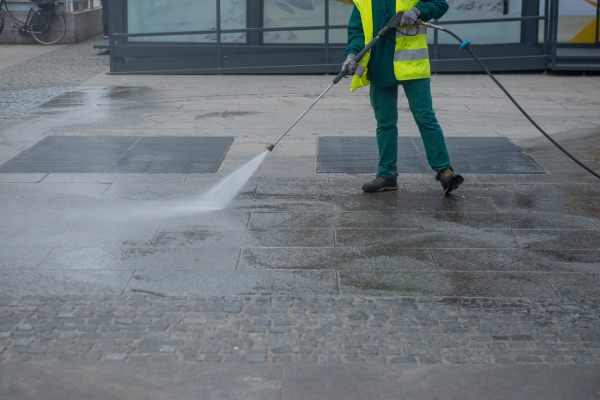
How Commercial Parking Lot Oil Stains Multiply in Ocala and What Actually Works
Parking lots across Ocala are telling a story that business owners would rather forget. Vehicles pull in and out dozens of times each day. Oil drips from engines accumulate in small pools. Grease from restaurant deliveries leaves dark, spreading stains. Rust and mineral deposits bond to the asphalt surface. Within weeks, a clean lot deteriorates into a stained, dingy eyesore that actively damages your business’s reputation.
The frustrating truth is that standard pressure washing equipment and methods fail to remove established oil stains. They recirculate oil across the surface. They push stains deeper into porous asphalt. They create temporary cleaning that looks good for a few days before the stains reappear, even darker than before.
Understanding why oil stains spread so aggressively, and why certain techniques actually work when others fail, is the key to maintaining a professional parking lot that enhances rather than undermines your business image.
Why Oil Stains Spread So Relentlessly in Ocala Parking Lots
Ocala’s climate and geography create specific conditions that accelerate oil stain formation and make existing stains harder to remove permanently.
High Heat Accelerates Oil Penetration
Ocala experiences intense, sustained heat from April through October, with surface temperatures on asphalt regularly exceeding 140 degrees Fahrenheit. At these temperatures, engine oil becomes thinner, more fluid, and much more deeply penetrating into the porous asphalt surface. Oil that drips onto cool asphalt might rest on the surface. Oil that drips onto hot asphalt immediately soaks deep into the material, bonding with asphalt particles at a molecular level.
Vehicle Frequency Creates Multiple Contamination Events
Commercial parking lots serve dozens or hundreds of vehicles daily. Each vehicle represents a potential new source of oil contamination. A single oil leak might deposit enough liquid to create a lasting stain. Multiple leaks across weeks and months deposit layer upon layer of additional oil, making stains deeper and more resilient with each passing incident.
Saltwater and Mineral Deposition
Ocala’s water systems contain dissolved minerals and salts that deposit on asphalt surfaces as water evaporates. These mineral deposits bond to oil stains, creating composite contamination that is exponentially harder to remove than oil alone. Standard pressure washing addresses the surface oil but leaves mineral deposits intact, allowing stains to reappear as soon as rainfall or humidity washes away cleaning residue.
Asphalt Porosity Varies Across the Lot
Asphalt is not uniform. Areas with finer grain structure absorb and retain contaminants more readily than coarser areas. Older asphalt oxidizes and becomes more porous. Thinner areas of asphalt offer less material depth to absorb and dilute oil stains. These variations mean that different sections of your parking lot require different treatment approaches to achieve consistent results.
Why Standard Pressure Washing Falls Short
Many business owners attempt to address parking lot oil stains with conventional pressure washing equipment and techniques. These methods consistently underperform because they misunderstand how oil contamination actually behaves.
High Pressure Drives Stains Deeper
Counterintuitively, excessive pressure applied to an oil stain can actually drive the oil deeper into the asphalt rather than remove it. The pressure force pushes liquid contaminants into pores that they have not yet fully penetrated, making the problem worse. Standard pressure washing creates a false sense of success because the surface briefly appears cleaner, but beneath the surface, the stain is now more firmly embedded.
Incomplete Extraction Leaves Hidden Contamination
Standard pressure washing combined with detergent breaks up and mobilizes oil stains, but fails to extract all of the contaminated material from the asphalt. Some oil gets washed away, but residual oil remains trapped in pores, immediately beginning to re-saturate and regather as water evaporates. The stain reappears within days, sometimes appearing even darker because it has concentrated as residual moisture evaporates.
DIY Methods Lack Specialized Chemistry
Commercial strength oil stain removers are formulated to dissolve and chemically lift oil contamination at the molecular level, breaking the bond between oil and asphalt. Consumer products available at hardware stores use weaker formulations that soften stains without permanently removing them. Professional chemicals are engineered to completely disintegrate the structure of oil molecules, transforming them from a solid contaminant into a liquid that can be extracted from the asphalt completely.
What Professional Oil Stain Removal Actually Involves
Effective parking lot oil stain removal in Ocala requires a multi-step approach that addresses oil at every depth level and prevents regrowth.
Chemical Pre-Treatment and Saturation
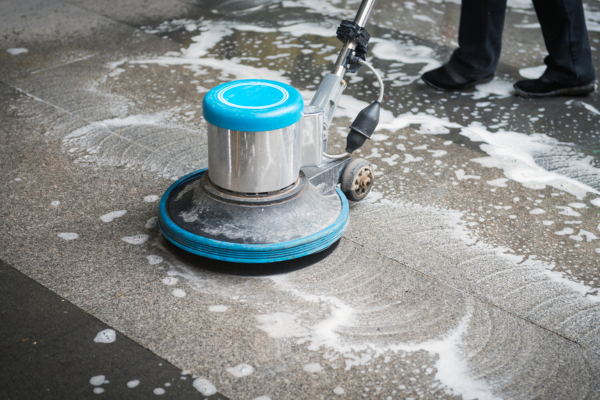
The process begins with the application of professional-grade oil degradation chemicals that penetrate the asphalt and begin breaking down oil molecules immediately. Unlike pressure washing alone, these chemicals work chemically rather than physically, reaching contaminants that exist deep within asphalt pores. The chemical must be allowed to dwell and work for a specific time period before pressure washing begins.
Controlled Pressure Extraction
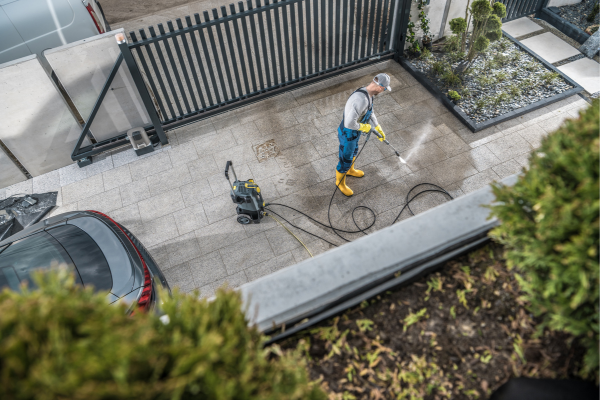
After chemical treatment, hot water pressure washing at precisely calibrated pressure levels mobilizes the chemically degraded oil and extracts it from the asphalt. This is not a brute force application. The pressure is tuned to remove contamination without driving residual oil deeper or damaging the asphalt surface itself.
Secondary Treatment and Final Extraction
For severe, long-established stains, a second round of chemical treatment and extraction may be necessary. The first pass removes the majority of contamination. The second pass addresses residual staining that remains visible after initial treatment, ensuring uniform appearance across the entire lot.
Post Treatment Protective Application
Many professional oil stain removal services conclude with the application of an asphalt seal coat or protective treatment that fills micro-pores in the asphalt and reduces future oil absorption. This protective barrier makes the asphalt less porous and resistant to future oil staining, extending the time between required cleanings.
Maintaining Your Ocala Parking Lot Between Professional Cleanings
Preventing excessive stain buildup is far easier and more cost-effective than aggressive stain removal after the fact.
Implement a regular street sweeping schedule to remove surface contaminants, dust, and debris before they accumulate and create grinding surfaces that trap stains. Address fresh oil spills immediately with absorbent materials to prevent them from being pressed into the asphalt by vehicle traffic. Schedule professional parking lot cleanings annually at a minimum, or semi-annually for high-traffic commercial lots where oil and grease accumulation is aggressive.