Why Restaurant Grease Stains Damage Exterior Surfaces Faster in Belleview
Belleview’s restaurant scene is thriving with diverse dining options, but behind the scenes, many restaurant owners battle an ongoing battle they rarely discuss publicly. Grease stains that appear on drive-throughs, dumpster pads, loading docks, and exterior walls spread faster than most business owners expect. Health inspectors notice. Customers notice. The stains signal neglect, poor sanitation, and contribute to a professional image that repels rather than attracts.
Restaurant grease is fundamentally different from residential cooking residue. It is commercial grade, it is deposited in concentrated volumes, and it has been exposed to high-heat cooking, which has made it adhesive and extremely resistant to standard cleaning methods. Without professional intervention, grease stains compound rapidly, creating conditions that violate health codes and actively damage the underlying surfaces.
How Restaurant Operations Create Aggressive Grease Accumulation
Every restaurant operation in Belleview generates grease contamination as a natural byproduct of commercial cooking and food delivery.
High Volume Cooking Operations Generate Constant Grease Output
Commercial restaurant kitchens operate continuously during service hours, generating enormous quantities of aerosolized and liquid grease. Exhaust hoods, ventilation systems, and cooking surfaces release grease vapor constantly. Some of this vapor condenses on exterior surfaces, roof lines, and walls of the building. The volume of grease generated in a busy commercial kitchen is orders of magnitude greater than that of typical residential cooking.
Delivery and Disposal Operations Concentrate Grease
Deliveries of cooking oil, packaged goods, and ingredients involve transfer operations where spills are common. Disposal of used fryer oil and grease traps creates spill risk during emptying and cleaning. Dumpster pads accumulate food waste and grease from regular garbage disposal. These areas become particularly grease-saturated because they represent concentrated points of waste handling where accidents and minor spills are inevitable.
Thermal Cycles Bond Grease to Surfaces
Belleview’s hot days and cool nights create thermal expansion and contraction cycles that cause grease to bond more firmly to surfaces. Heat softens grease and drives it deeper into porous materials. Cooling hardens it back into a solid state that is mechanically locked into the substrate. Multiple thermal cycles over weeks and months create increasingly aggressive bonding that resists removal.
Florida Humidity Prevents Evaporation
Unlike colder climates, where some grease contamination naturally dries and can be swept away, Belleview’s year-round humidity keeps grease in a partially liquid state. It does not fully harden and detach naturally. Instead, it remains sticky and adhesive, attracting dust, dirt, and additional contamination that is layered on top of the grease and cementing it to the surface.
Why Restaurant Grease Stains Violate Health Codes
Health departments across Florida enforce strict standards for restaurant sanitation, including exterior appearance and cleanliness.
Visible Grease Indicates Sanitation Failures
Health inspectors view exterior grease staining as evidence of kitchen sanitation that is likely failing in areas customers do not see. Grease on the outside of a restaurant communicates to the inspector that grease accumulation is probably occurring on interior surfaces, cooking equipment, and in ventilation systems as well. The presence of exterior grease can trigger enhanced internal inspections or documented violations.
Grease Creates Slip and Fall Hazards
Grease on loading docks, dumpster pads, or rear parking areas creates dangerous slip hazard conditions for employees and delivery personnel. If an injury occurs on a grease-slicked surface that management was aware of but failed to address, liability implications become significant.
Pest Attraction and Infestation
Visible grease attracts rats, cockroaches, flies, and other pests that are immediate health code violations. The presence of pests on the property triggers automatic violations and can result in temporary closure or heavy fines if not immediately remedied.
Standard Cleaning Methods Fail on Restaurant Grease
Restaurant owners who attempt to address grease stains with standard pressure washing or basic degreasing products quickly discover these approaches are insufficient.
Detergent Soap Lacks Sufficient Degreasing Power
Consumer degreasing products work well on everyday cooking residue but fail against commercial kitchen grease that has been exposed to high heat and bonded to surfaces through multiple thermal cycles. The alkaline chemistry of standard degreasers is simply not strong enough to break down restaurant-grade grease that has partially polymerized through heat exposure.
Hot Water Alone Merely Redistributes Grease
Hot water pressure washing can temporarily soften grease and move it around, creating an illusion of cleaning. But without chemical action, the hot water disperses grease across a wider area rather than removing it. Once the water cools, the grease rehardens across that larger footprint, actually making the appearance worse.
Incomplete Removal Leaves Film Residue
When methods fail to completely remove grease, a slick residue remains on the surface. This residue is invisible in some lights but creates dangerous slip hazards and immediately begins accumulating new dirt and contamination. The property quickly reverts to appearing filthy despite recent cleaning efforts.
Professional Restaurant Grease Removal Techniques
Professional pressure washing companies that specialize in restaurant cleaning employ industrial-grade degreasing chemistry and precise methodology to achieve complete grease removal.
Commercial Grade Alkaline and Solvent-Based Cleaners
Professional degreasing solutions combine alkaline compounds that saponify grease (convert it to a water-soluble soap-like substance) with organic solvents that dissolve grease at the molecular level. These formulations are far more aggressive than consumer products and are specifically engineered for the demanding task of removing restaurant kitchen grease.
Extended Dwell Time for Chemical Reaction
Rather than immediately pressurizing after application, professional crews allow degreasing chemicals adequate time to penetrate and chemically break down grease contamination. This dwell time is critical. It allows the chemical to work at a molecular level rather than relying on pressure force alone to remove stubborn deposits.
Hot Pressure Washing for Complete Extraction
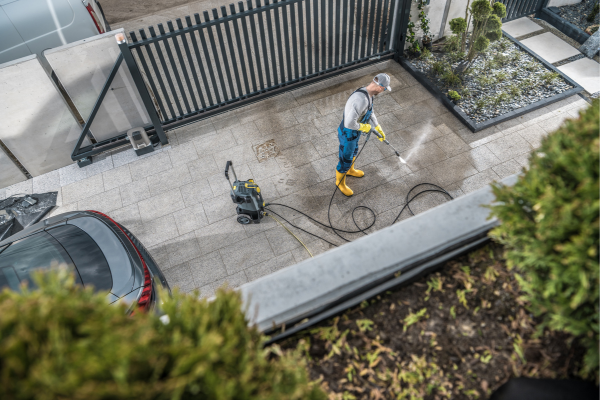
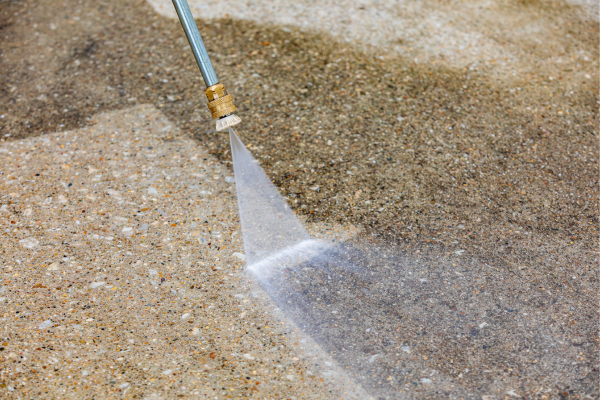
Only after the chemical has adequately worked does hot pressure washing begin. The heat, combined with pressure, applied with proper nozzle selection and distance, extracts the chemically degraded grease completely from the surface. Because the grease has already been chemically converted and loosened, extraction is thorough rather than partial.
Targeted Attention to High Risk Areas
Professional crews focus intense attention on dumpster pads, loading docks, drive-through areas, and any other location known to accumulate restaurant grease. These areas receive multiple treatment and extraction cycles to ensure complete removal and health code compliance.
Scheduled Maintenance Prevents Crisis
The most effective approach is to schedule professional restaurant grease removal regularly before accumulation reaches the level that triggers health code violations or customer complaints.
Monthly or quarterly pressure washing of dumpster pads, loading docks, and exterior walls ensures grease never accumulates to problem levels. The cost of scheduled maintenance is far less than the cost of emergency cleaning plus potential health department fines, temporary closure, or damage to reputation from negative customer experiences.